What the New 2026 Safeguarding Guidance Means for Fostering
Safeguarding is at the heart of everything we do in fostering.
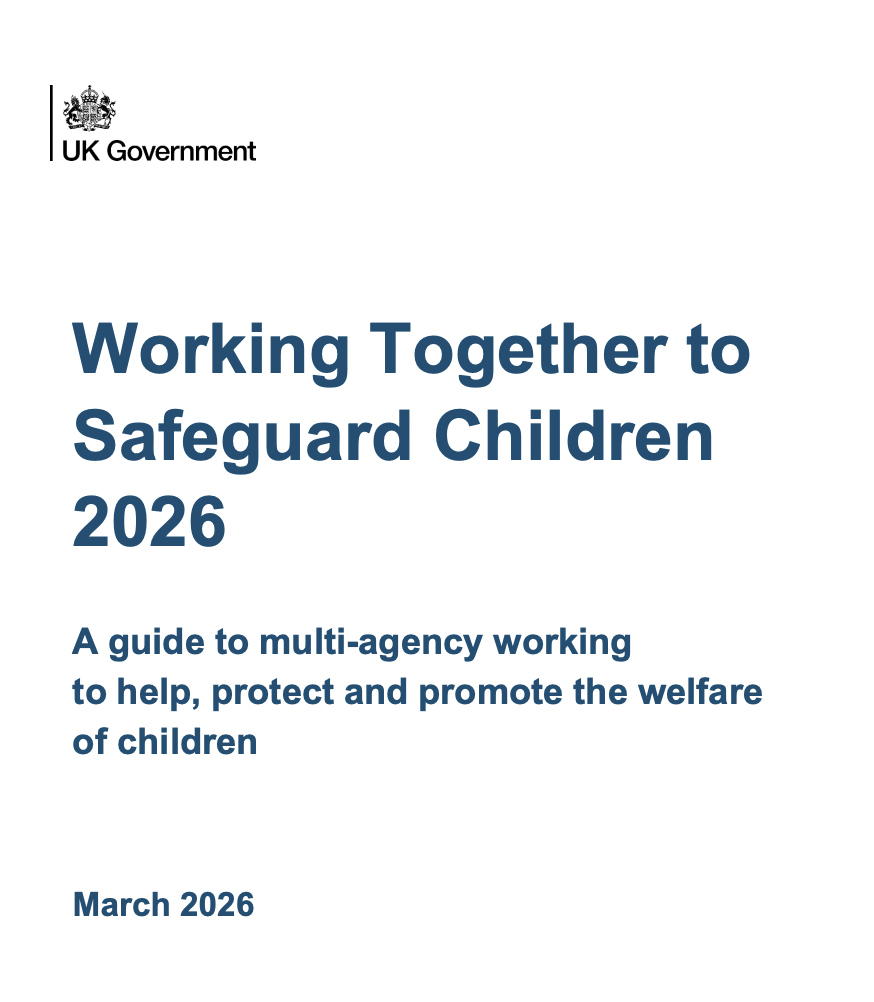
With the release of The Department for Education’s updated statutory guidance, Working Together to Safeguard Children 2026 (published 18 March 2026), there is a renewed national focus on how professionals protect, support, and advocate for children and young people.
At Rainbow Fostering, we welcome this guidance because it strengthens what we already believe and practice: that every child deserves to feel safe, heard, and valued.
Every Child, Every Placement

The updated guidance reinforces that safeguarding applies to all children, including those in kinship care, adopted children, and those in foster care.
For fostering services, this is fundamental.
Every child placed with a foster family carries their own experiences, needs, and vulnerabilities. Safeguarding is not a one-time action, it is a continuous responsibility. It lives in everyday moments: in how carers listen, how professionals respond, and how decisions are made.
At Rainbow, we see this as an opportunity to go further, to ensure that every child in our care not only feels safe, but genuinely understood.
Championing Inclusive and Anti-Discriminatory Care
A key message within the new guidance is clear: safeguarding must be anti-racist and anti-discriminatory.
For children in care, identity matters.
Many children experience disruption not only in their home lives, but also in their sense of belonging. Fostering must therefore go beyond providing safety. It must nurture identity, culture, faith, and self-worth.
This means supporting foster carers to:
Provide culturally sensitive care
Respect and celebrate each child’s background
Challenge discrimination wherever it arises
Challenge their own internal biases
At Rainbow Fostering, this is not new, it is embedded in our values. But this guidance reinforces that this work must be intentional, consistent, and visible.

Seeing What Is Often Unseen
The 2026 guidance places stronger emphasis on recognising hidden harms.
These include:
Child sexual abuse
Domestic abuse and coercive control
Teenage relationship abuse
Online exploitation
For children in foster care, these risks can be particularly complex. Many may have experienced trauma that is not immediately visible. This is where fostering makes a profound difference.
Foster carers, supported by skilled professionals, are often the first to notice subtle changes, shifts in behaviour, mood, or communication. This is supported by the daily diary recordings that they are expected to do. Acting early can change the trajectory of a child’s life.
Safeguarding, therefore, is not just about responding to risk. It is about noticing, understanding, and acting before harm escalates. Remember, prevention is always better.
Stronger Multi-Agency Working Around the Child

No child is supported by one service alone.
Children in foster care are surrounded by a network of professionals, social workers, schools, health services, and specialist teams.
The updated guidance strengthens expectations around how these professionals work together: with greater accountability, clearer communication, and shared responsibility.
For fostering agencies, this means continuing to:
Advocate confidently for children
Share information effectively
Work collaboratively to achieve the best outcomes
At Rainbow, we see ourselves as a key part of this network, ensuring that every child’s voice is heard and their needs are fully understood.

A More Joined-Up Approach to Supporting Families
The introduction of a unified Family Help approach highlights the importance of early intervention and consistent relationships.
In fostering, this is particularly relevant when supporting:
Contact with birth families
Reunification plans
Long-term stability for children
When support is joined-up and relationships are strong, outcomes improve—not just for children, but for families as a whole.
Raising the Standard of Care and Protection

The guidance places a clear emphasis on:
Stronger assessments
More direct engagement with children
Robust, child-centred decision-making
In fostering, this means ensuring that every child’s voice is central, not just heard, but actively shaping the care they receive.
Children in care must never feel like decisions are made about them without them. They must feel part of the process, respected, and understood.

Leading the Way in Fostering Practice
At Rainbow Fostering, we do not see this guidance as a checklist.
We see it as a call to lead stronger.
We are committed to continuously strengthening our practice by:
Supporting and training our foster carers to the highest standard
Embedding inclusive, child-centred approaches in everything we do
Working proactively with partners to safeguard and advocate for children
Safeguarding is not just about protection, it is about creating environments where children feel safe enough to grow, heal, and thrive.
Thinking About Fostering?
If you are considering becoming a foster carer, there has never been a more important time.
Foster carers play a vital role in safeguarding children, not just by providing a home, but by offering stability, care, and understanding when it is needed most.
If you would like to learn more about fostering with Rainbow, we would love to hear from you.